Gourd Banjo Build
During the fall, I took a trip to the John C Campbell folk school, where I had the pleasure of working on clawhammer banjo with a local legend for an entire week. Among the fantastic company, early morning herb picking, and endless repeats of the same melodies, someone let me play with an old gourd banjo they brought in. No frets, sorta dinky, but so sick.
If you don't know what a gourd banjo is - I didn't either! I won't get into the history, but they are similar to a banjo in that they are a 5-stringed instrument and tuned the same, but special in that the drum is made traditionally from a gourd, and often without frets for simplicity's sake. They are a sort of mashup of modern banjos and traditional African akontings.
Fast forward to the winter, and Ben Greco's YouTube videos started showing up on my timeline. Not a lot of young creators in the Banjo world, so new ones are always a treat, and Ben's videos are fantastic. He goes into proper detail about how he builds his beautiful banjos (more of which you can see here). I'm currently living somewhere with a woodshop in the basement, and slowly starting to think to myself - I could totally make one of these myself.
So I threw myself at it.
I went to Home Depot, bought a cheap fence post, and followed this Ben Greco video to make the neck design. Learning to use the band saw was so cool, and honestly, it's still one of my favorite tools.
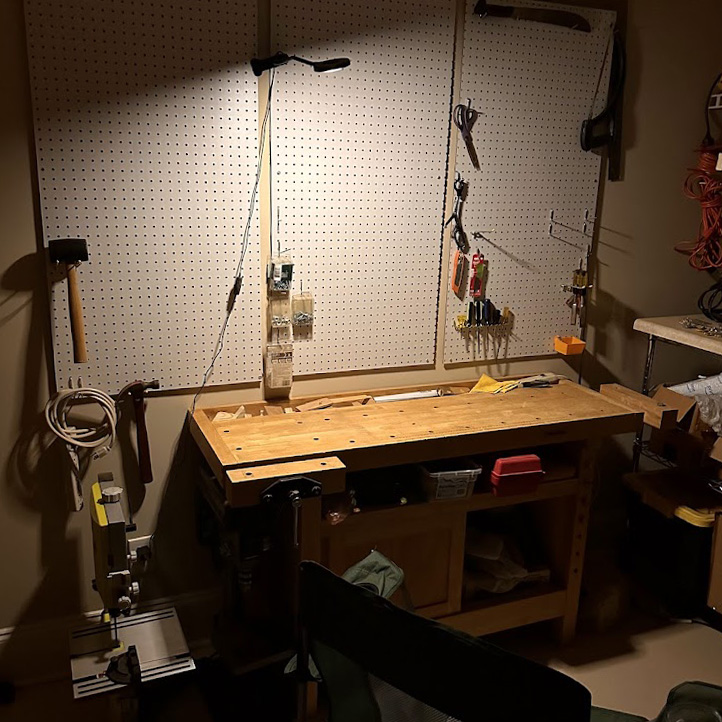
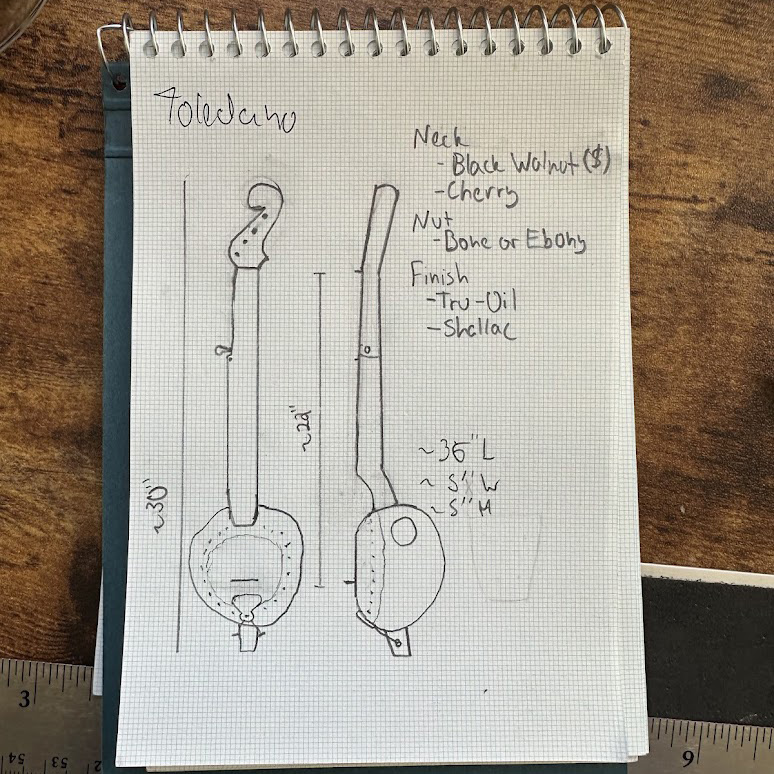

Finding the balance between what tools I needed and what tools I just wanted was a hard line. Like, did I really need to get a curved knife for wood carving? No. Will I use it later? Probably not. But it was a part of my exploration, and I accept that for what it is. I think some goofy exploratory spending is an important aspect to all of these types of projects.
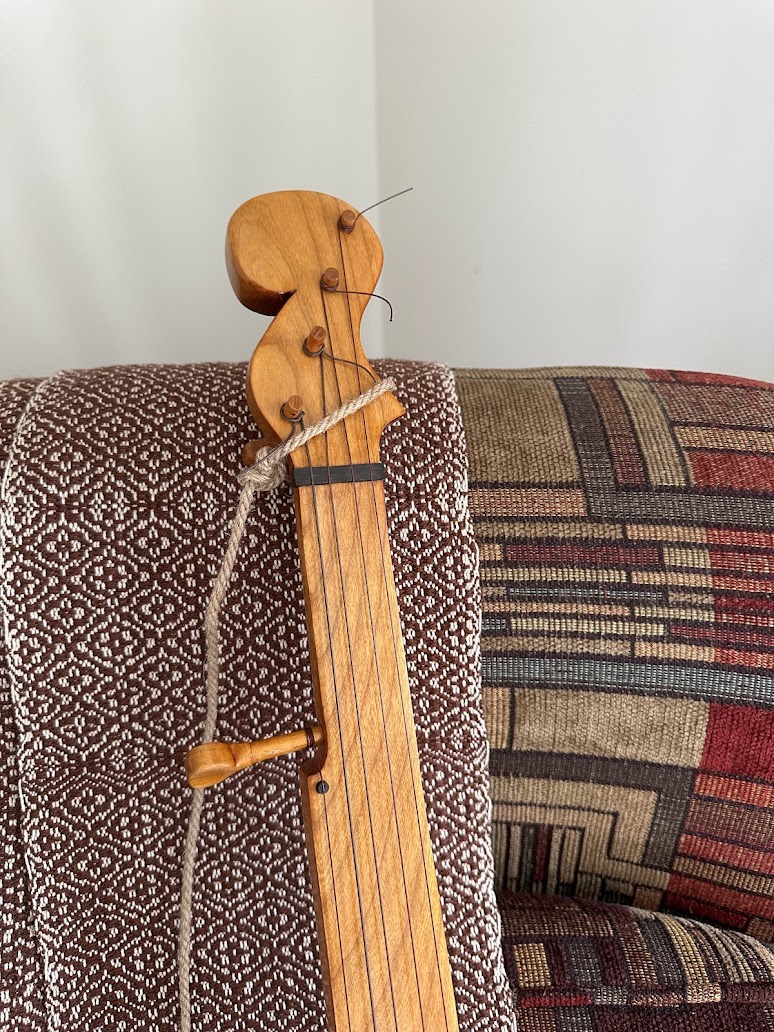
In the end, I decided to go for a cherry wood neck. I bought a really nice and large piece of cherry from a wood turning shop near me, which is nice in that they're already shaved down to be really clean 90-degree angles all around. That I turned into the neck for the banjo.
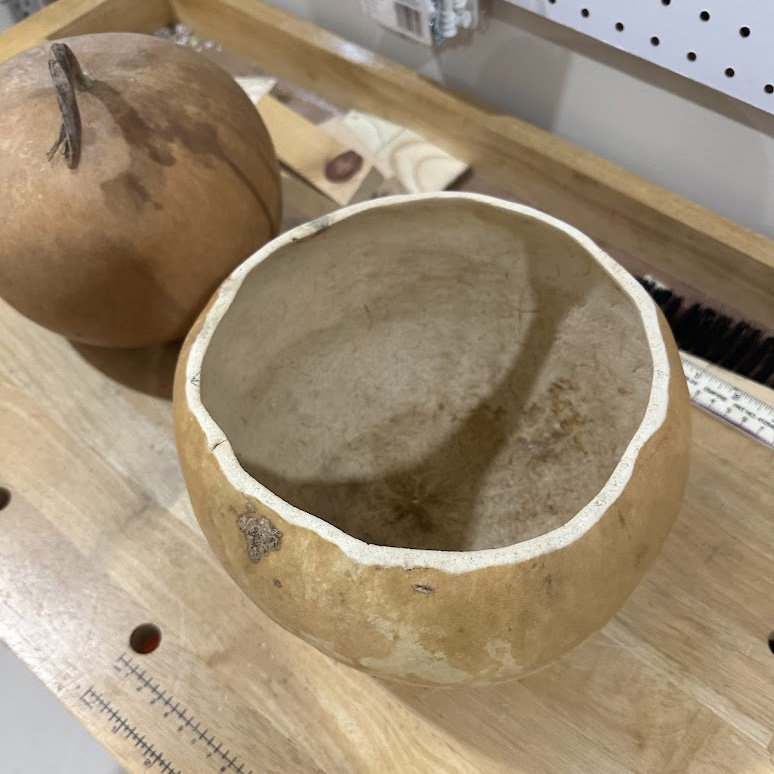
Next, I had to tackle the issue of the gourd. Luckily, as a beekeeper, I have a crazy mentor who knows too many local crazy people - and she had a gourd guy. It's weird - gourd sourcing was hard to find information about online, but a gourd farm would've been a great place to get started. I've learned since that gourds need almost a year after they're pulled to be ready for a gourd banjo (or most other gourd projects, for that matter). They just need to be dried out properly.
One visit to a random townhouse later, I had my hand on some gourds. I went through the long process of cutting off the top and scooping out all the innards (photo of the cleaned out gourd to the left), and then I had the idea to fiberglass-reinforce the inside. This is a good step to take for gourd stability, and I'm glad I did it, but I'm also grateful no one can see the inside of my gourd today - an extremely messy and smelly process.
Once that's done, I could start attaching my cherry neck to the gourd itself. This is a slow and strenuous process, as you want tension to keep the neck inside the gourd itself, and the tension of the strings to eventually keep everything together. This means later I could replace the gourd or other pieces if I wanted. This is also an exciting step because it looks really real in this step.


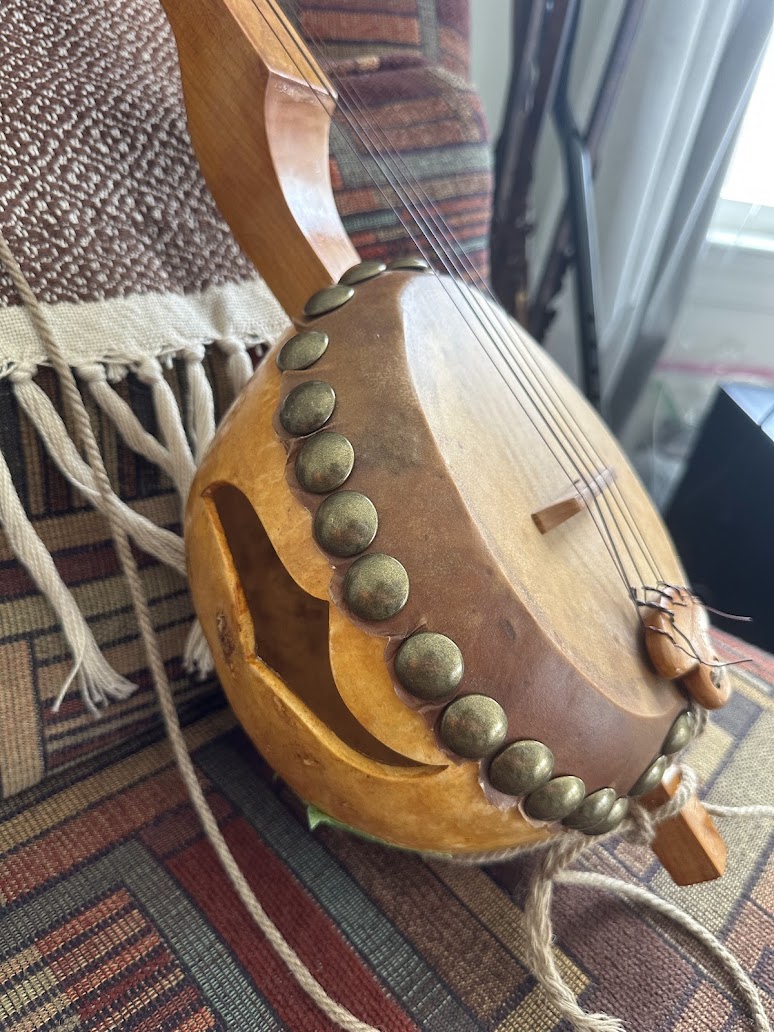
Eventually - it was time to put on the goatskin. This was a scary process, and I definitely put on way too many tacks around the banjo, but that's alright.

I dyed the goat skin in instant coffee overnight in a 5-gallon bucket, let the goatskin fully dry, wet it about 20 minutes before installation, added hide glue, and draped the goatskin around, pulling it as taut as possible and adding pegs to keep it taught. I did not touch or play with the head at all until the next morning, and when it was all dried up and done, it sounded like a proper little drum! That was such a gratifying feeling getting over that step.
Finally I had the completed gourd and the completed neck, but I still had to make the pegs, the nuts, the bridge, and the tailpiece! Each would be its own custom piece of wood with its own headaches and challenges - but fun and calming challenges to get lost in.
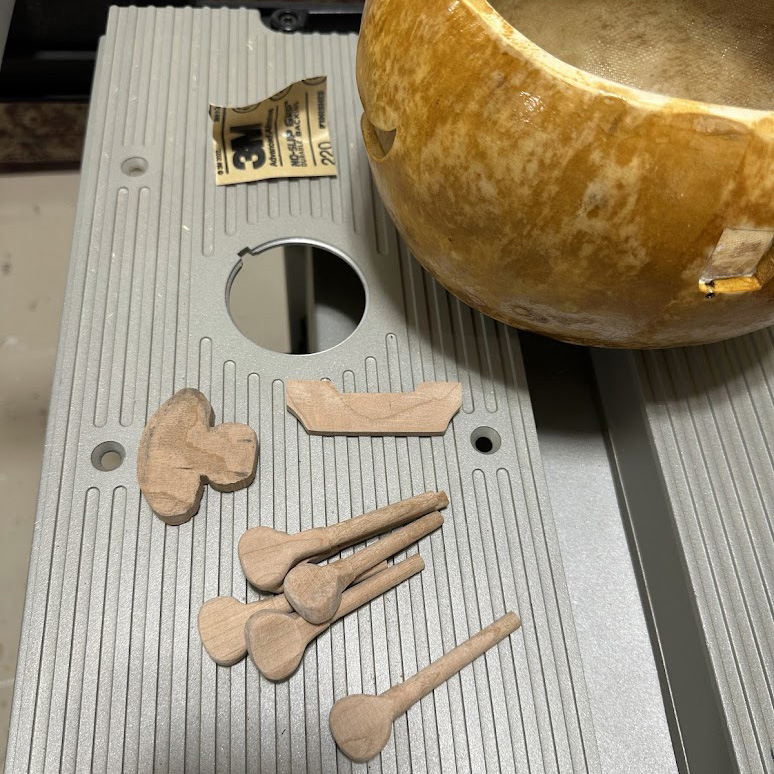

The two biggest headaches were the pegs themselves and the nuts.
The pegs, because they took so long to shave down and get to the right shape using violin peg reel shavers. This was a process of removing material using a rasp, trying to move it through the shaver, and repeat. And for each peg, I also had to bore the correct holes into the head of the bajo using a violin peg hole reamer, which was mostly nerve-racking.
Then for the nuts and bridge - I'm still not sure I got that 100% right. I was recommended by a local luthier to purchase some feeler gauges and use an angle grinder to make my own files, which was a great tip, but still, I couldn't truly get the angle perfectly right to avoid any buzzing. I spent so much time rereading this guide on nuts and how strings sit in them just to understand the basics. There still lies some buzzing in the instrument, but that's part of a luthier's first instrument, I suppose.
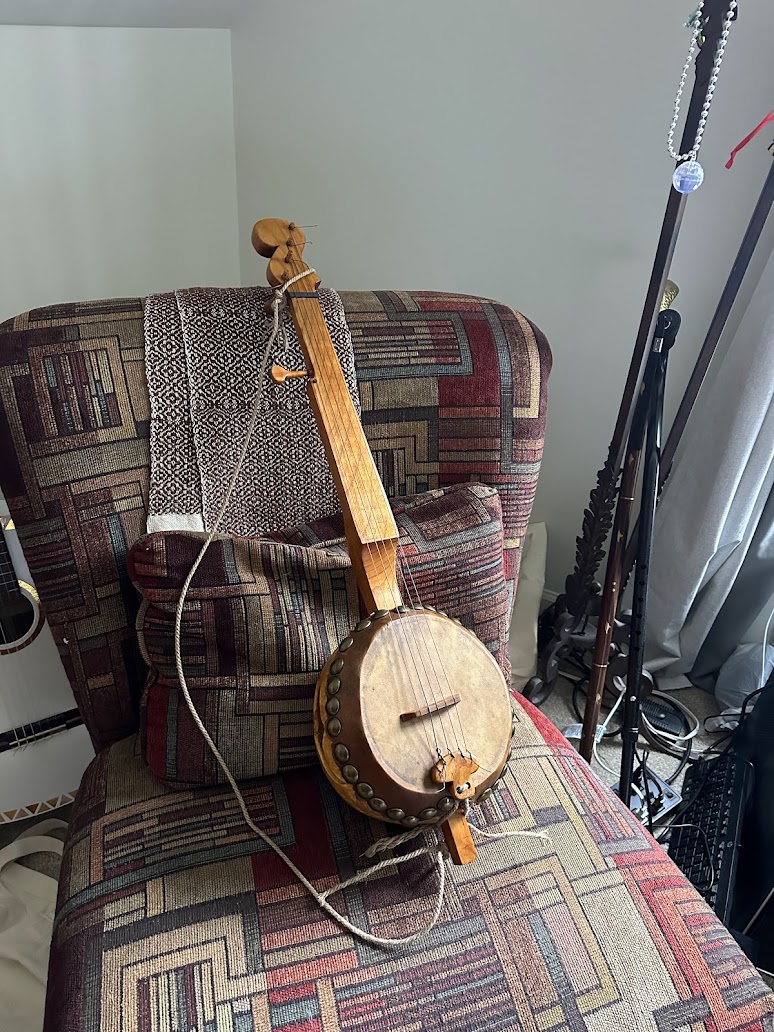
At this point, it was the home stretch - finishing (which of course took the longest because I procrastinate finishing most things). I used Shellac on the Gourd and the neck, and then finished the fretboard with Tru-Oil. It's an uneven job and not perfect, but feels good to hold and makes all the pieces look so much nicer.
I then set up and added some Aquila Red Nylon strings, and this piece was done.
At this final stage, I also tried adding a beeswax and lavender mix I made using some leftover wax I had from the summer to get rid of the smell of shellac, but that lavender smell never stuck, and the smell of the shellac eventually just went away.
Was so happy and proud to finally get this piece completed. There are so many things I'm sure I could've improved and done better, but I have a gourd banjo now that I can say I 100% created myself - all without any professional training, and that is just so sick. Constantly amazed that we can just create whatever we want if we put enough determination into it.

Thanks for reading this far! Until next time - this is Enzo signing off, leaving you with an image of what I hope to be looking like in about 10 or so years.